

The Arado Ar 196 of Heraklia (Cyclades)
-
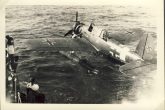
The Arado Ar 196 A3 with the side markings D1+EH and the production number (Werknummer) 0185 immediately after its shooting down and the attempt by the German escort anti-submarine vessel UJ-2104 to tow it (Archive Peter Schek) -
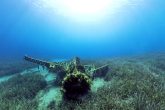
The aircraft as it is still at the bottom, in the bay of Alimas, of Heraklia (@ Kostas Milonakis) -
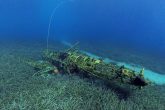
Details of the fuselage framework (@ Kostas Milonakis) -
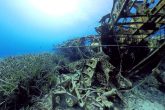
The rear part of the fuselage (@ Kostas Milonakis) -
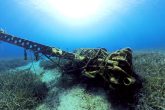
The front part of the aircraft with the engine (@ Kostas Milonakis) -
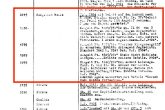
Εntry regarding the convoy PLUTO-PAULA in the War Diary of the German 21st Anti-Submarine Flotilla (21. UJ Flottille) -
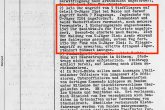
Entry regarding the aerial combat and the shooting down of the Arado 196 in the War Diary of the German Naval Command Aegean -
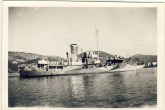
The anti-submarine vessel UJ-2104 (formerly the whaler DARVIK). This is the ship that served as an escort for the German convoy and towed the Arado 196 after it was shot down. (Archive Peter Schenk) -
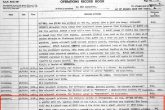
Entry regarding the aerial combat and the shooting-down of the Arado 196 in the 252nd Squadron’s Operations Logbook. First page -
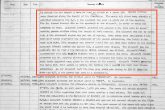
Entry regarding the aerial combat and the shooting-down of the Arado 196 in the 252nd Squadron’s Operations Logbook. Second page -
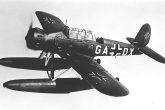
The Arado 196 seaplane, which was used extensively not only in the Greek region but also across all fronts of the Second World War (Archive Dimitris Galon) -

Video from Arado, Ar 196 of Iraklia
In August 2026, Kostas Mylonakis, a member of Antonis Grafa’s diving team, visited the wreck of a German Arado 196 A3 aircraft, which is submerged in the bay of “Alimia”, on the island of Heraklia, in the Small Cyclades. Although only the fuselage and its engine remain of this particular aircraft, it is nevertheless, as a find, an important historical document, which highlights the military activity and the battles fought for the control of the Aegean in the fall of 1943, immediately after the capitulation of the Italian forces under General Pietro Badoglio.
Historical research has identified this aircraft as an Arado Ar 196 A3 belonging to 1./A.Gr. 126 (1. Staffel der Aufklärungsgruppe 126) of the Luftwaffe, bearing the fuselage side markings D1 + EH and the production number (Werknummer) 0185. According to the loss records of Quartiermeister VI, this specific Arado—crewed by pilot Unteroffizier Fritz Schaar and radio operator Unteroffizier Herbert Schneider—was shot down on September 17, 1943, approximately six kilometers northeast of the island of Ios, by Allied aircraft from the RAF’s 252 Squadron.
According to research conducted by the researcher Manolis Bardanis, in 1982, the wreckage of the aircraft became accidentally entangled in the nets of the fishing vessel *Robinson* (N.P. 1377). The vessel, captained by Sarantis Oikonomou from Naxos, was fishing at a depth of 90 meters northeast of Ios. In order to free its fishing gear from the aircraft, the *Robinson* sailed to Alimia Bay on the island of Iraklia, where, with the assistance of another fishing boat, it managed to disentangle itself from the wreckage. Since then, the Arado 196 has remained abandoned in Alimia Bay at a depth of 11 meters.
Technical specifications of the Arado Ar 196
The Arado Ar 196 was a single-engine German multi-purpose seaplane that saw extensive service across all fronts of World War II. It joined service with the Luftwaffe in October 1938 and remained in operation until the end of the war. In the post-war period, it was used by the air forces of various nations—including Romania and the USSR—until the mid-1950s. In Greece, it was employed by the Luftwaffe during the war, primarily for reconnaissance and convoy escort duties. The general technical specifications of the aircraft were as follows:
Type: General-purpose aircraft
Manufacturer: Arado Flugzeugwerke GmbH
Length: 11 meters
Wingspan (length from the tip of the left wing to the tip of the right wing): 12.47 meters
Height: 4.42 meters
Wing area: 28.40 square meters
Weight (empty): 2,090 kilograms
Maximum takeoff weight: 3,720 kilograms
Engine: One 132 K KSternmotor
Power: 960 PS (716 kW)
Maximum speed: 309 kilometers per hour
Range: 1,072 kilometers
Maximum altitude: 7,010 meters
Crew: 2 personnel
Indicative armament: Two 20mm cannons, two 7.9mm machine guns, and two bombs of 50kg each.
Historical research
Historical archival research has shown that this is clearly the German Arado Ar 196 A3 aircraft with side markings D1+EH and production number (Werknummer) 0185, which belonged to the 1st Squadron of the Luftwaffe’s 126th Reconnaissance Wing (1./Aufklärungsgruppe 126) based at Scaramanga. According to Quartiermeister VI’s casualty records, the aircraft, piloted by Unteroffizier Fritz Schaar and radio operator by Unteroffizier Herbert Schneider, was shot down, following aerial combat with Allied Beaufighters, on 17 September 1943. German archival sources give the crash site as six kilometers north-east of the island of Ios. They also report that the aircraft was not lost but managed to land, without loss of life, near the accompanying convoy ship UJ -2104, which then towed the aircraft.
According to German sources, this particular Arado—along with another aircraft of the same type—had taken off from Scaramanga with the mission of escorting a German convoy. The convoy, which consisted of the steamships PLUTO and PAULA escorted by the anti-submarine vessel UJ-2104 (formerly the British whaler DARVIK)—had departed from Piraeus bound for Rhodes, carrying troops and supplies, when it came under attack by British aircraft.
According to British archival sources, this specific Arado Ar 196 was shot down by one of four Allied Beaufighter aircraft from the Royal Air Force’s 252 Squadron, which had taken off from Limassol, Cyprus, to conduct offensive operations in the Aegean. The BeaufighteR bearing the serial number JM250 and crewed by pilot Keith A. Faulkner and navigator Geoff Goode succeeded in disabling the German Arado Ar 196 with well-aimed bursts from its cannons, forcing it to make an emergency landing on the sea.
According to the Operations Record Book of 252 Squadron RAF for 17 September 1943:
“Four aircraft took off from Larnaca at 12:35 to carry out attacks against maritime targets. At position 36° 49′ North / 25° 38′ East, a convoy was spotted, with a destroyer [identified as the anti-submarine vessel UJ-2104] in the lead and two merchant ships [identified as the PLUTO and the PAULA] sailing in a line. The larger merchant ship was of the ‘Island’ type, with a capacity of 5,000 tons, while the other was a small coastal freighter with a capacity of 1,500 tons. Two Arado 196 were patrolling around the ships at an altitude of 1,000 feet. One of the aircraft (JM250) climbed to engage the escorting air cover and launched a head-on attack against an Arado 196.”
Gunfire strikes were observed along the entire length of the fuselage. The enemy aircraft went into a steep dive and was subsequently seen alongside the destroyer [see UJ-2104], while one of the occupants was observed exiting the aircraft. The destroyer turned 90° as our aircraft approached, in order to bring its full armament to bear. The aircraft (JM250) strafed the coastal freighter and the destroyer from bow to stern, causing gunfire damage along the entire length of both vessels. Our aircraft was struck by heavy anti-aircraft fire, which disabled the starboard engine. Both bombs were jettisoned, and the navigator jettisoned the remaining gun ammunition, the V.G.O. [machine gun], and the portable S.4 [camera] (after first removing its film magazine). The aircraft returned safely to its base, flying on a single engine.
According to the War Diary of the German Aegean Naval Command (*KTB Admiral Ägäis), the Arado 196 was towed for a time by UJ-2104, however, this proved unsuccessful, and the aircraft sank northeast of Ios due to the continuous ingress of water. The following day, the convoy was intercepted by HMS FAULKNOR, HMS ECLIPSE, and the Greek destroyer VASILISSA OLGA near the island of Astypalaia. The two cargo steamers were sunk with significant loss of life, and the UJ-2104 was forced to run aground. According to subsequent accounts, the two individuals aboard the Arado 196 which bore the side markings D1+EH and the production number (Werknummer) 0185 were among the casualties. The fact that this was the only Arado 196 lost in the sea area north of Ios is a decisive factor in identifying the aircraft as the one with production number 0185.
The Discovery
The researcher Manolis Bardanis describes in his detailed article, in 2009, the discovery of this particular Arado 196, in the year 1982, 39 years after its loss:
In October 1982, the fishing vessel *Robinson* (Piraeus Registry No. 1377), captained by Sarantis Oikonomou (who passed away in 2003) from Naxos, was trawling north-northeast of Ios towards the island of Iraklia at a depth of approximately 50 fathoms (91 meters) and at a position roughly 36° 49´ North, 25° 22´ East. That day, the trawl net brought up an unexpected “catch”: a German seaplane. To free the aircraft from the nets—and to ensure they wouldn’t “catch” it again—the crew decided to discard it in the nearest sheltered cove, Alimia Bay on Iraklia. Upon arrival, they encountered another fishing vessel, *Agios Nektarios* (Naxos Registry No. 123), owned by Nikitas Sorokos, whose crew assisted in disentangling the seaplane from the trawl nets. According to the accounts of those present, there were no human remains, personal belongings, or any other signs of loss of life inside the cockpit area.
The Shipwreck
The wreckage of the German Arado Ar 196 aircraft is still located at a depth of 11 meters. Although in 1982, immediately after its abandonment in Alimia Bay, it still retained its armament, its instruments, and was generally in relatively good condition, due to its shallow depth and easy access it was relentlessly looted, so that today only the fuselage frame with the engine and some small pieces of the trawler’s net remain on the seabed. It has come to light that the machine guns, the propeller, the rudder, the instruments, and other items from the wreck have been removed and are now in private collections. Regardless, even in its current state, the Arado 196 at Iraklia remains an important witness to the wartime events that unfolded in the Aegean in the autumn of 1943 following Italy’s capitulation as the two fiercely opposing forces, the Wehrmacht and the Allies, vied for control of the region.
Dimitris Galon
Sources
Kriegstagebuch der 21. UJ-Flottille
Kriegstagebuch des kommandierenden Admiralägäis
General Quartiermeister 6., Abteilung Flugzeugunfälle und Verluste bei den fliegenden Verbänden 01.09.1939-31.12.1943
Operations Record Book No 252 Squadron RAF, AIR27/1508
Goss, Chris: Combat over the Mediterannean, Frontline Books, 2017
Tesapsides, Byron: Die deutsche Luftwaffe in Griechenland im II. Weltkrieg 1941-1945, Thessaloniki 2011
Bardanis, Manolis: Arado Ar 196 A-3 / Heraklia Island – Cyclades, 2009